I have spent over a decade navigating the ever-changing landscape of Search engine optimization and helping businesses in India skyrocket their Online presence. Through countless Google updates and algorithm shifts I have learned that mastering On-page SEO is the most reliable path to sustainable growth. You might feel overwhelmed by the technical jargon or the sheer number of Ranking factors but I promise that understanding these core concepts will transform your digital strategy. My goal is to guide you through this journey so you can confidently optimize your website and see real results in your Search rankings.
This article is designed to give you a clear advantage by breaking down exactly Which On Page Element Carries The Most Weight For SEO and how to leverage it for maximum impact. We will explore the critical importance of Content quality and how it interacts with technical elements like the Title tag and Meta description. You will learn how to align your site with User intent to satisfy Google algorithms and capture valuable Organic traffic. By the end of this guide you will have a comprehensive understanding of Website optimization and a practical roadmap to enhance your Search visibility in the competitive Indian market.
The 3 Types of SEO
Which On Page Element Carries The Most Weight For SEO?
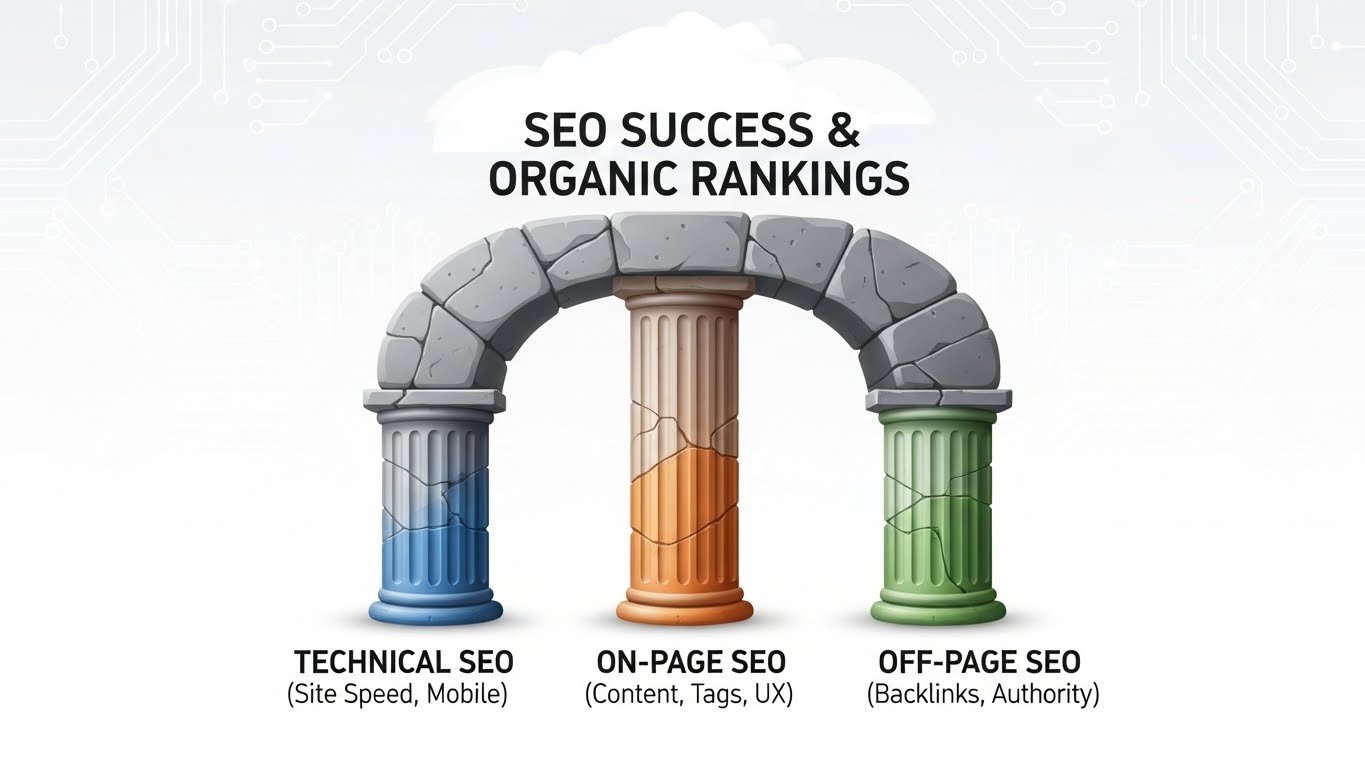
Search engine optimization is often described as a three-legged stool where each leg represents a distinct discipline that supports your overall success. The first leg is Technical SEO which focuses on the backend structure of your website to ensure Crawlability and Indexability for search bots. Technical SEO audit processes help identify issues like slow Site speed or poor Mobile-friendliness that could hinder your Organic search performance. Without a solid technical foundation your content may never reach its full potential in the SERPs.
The second and third pillars are Off-page SEO and On-page SEO which work together to build authority and relevance. Off-page SEO involves activities outside your website such as building Backlinks and managing your brand’s reputation to boost Domain authority. However On-page optimization is where you have total control because it involves optimizing your actual content and HTML source code. Balancing these three types is essential for a holistic Digital marketing strategy that drives consistent User engagement and revenue.
What is On-Page SEO?
Which On Page Element Carries The Most Weight For SEO?
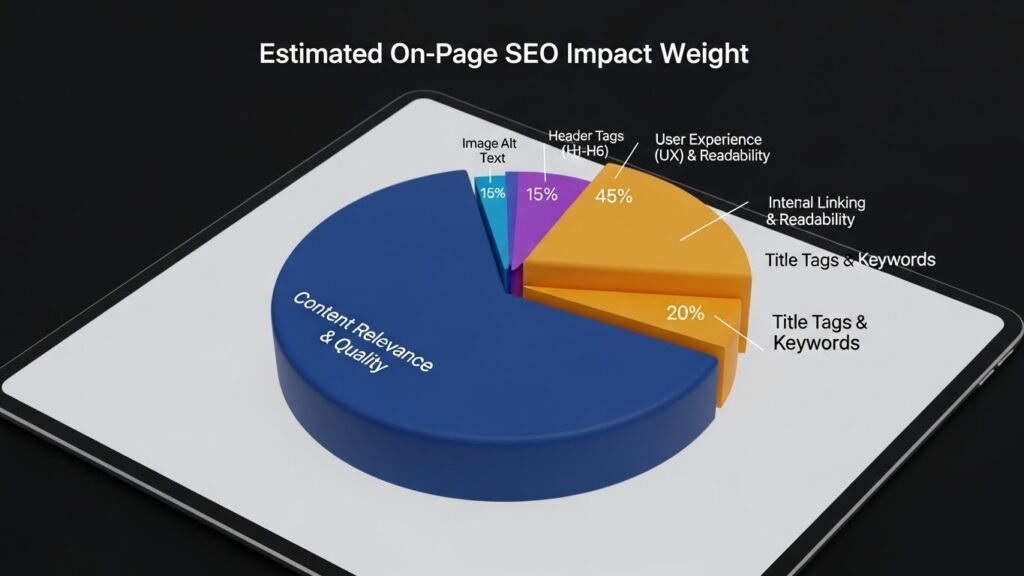
On-page SEO refers to the practice of optimizing individual web pages to rank higher and earn more relevant traffic in search engines. This process goes beyond simple Keyword usage and involves a deep dive into Content hierarchy and HTML tags. When you focus on On-page optimization you are essentially speaking the same language as Search engine algorithms to help them understand exactly what your content is about. This alignment is crucial for Semantic SEO because it helps Google connect your page with specific search queries.
A robust on-page strategy prioritizes User experience (UX) by ensuring that visitors find exactly what they are looking for quickly and easily. It includes refining elements like Content relevance and Page layout to keep readers engaged and reduce your Bounce rate. By adhering to SEO best practices on every page you signal to Google that your site is a trustworthy resource. This dedication to quality directly influences your Page authority and helps you establish Topical authority within your specific niche or industry.
| SEO Element | Primary Function | Impact on User |
| Title tag | Defines page topic for bots | First impression in SERPs |
| Meta description | Summarizes content | Encourages clicks (CTR) |
| Content quality | Satisfies user query | deeply engages the reader |
| Internal links | Connects related pages | Aids navigation |
| Heading tags | Structures the article | Improves readability |
Title tag
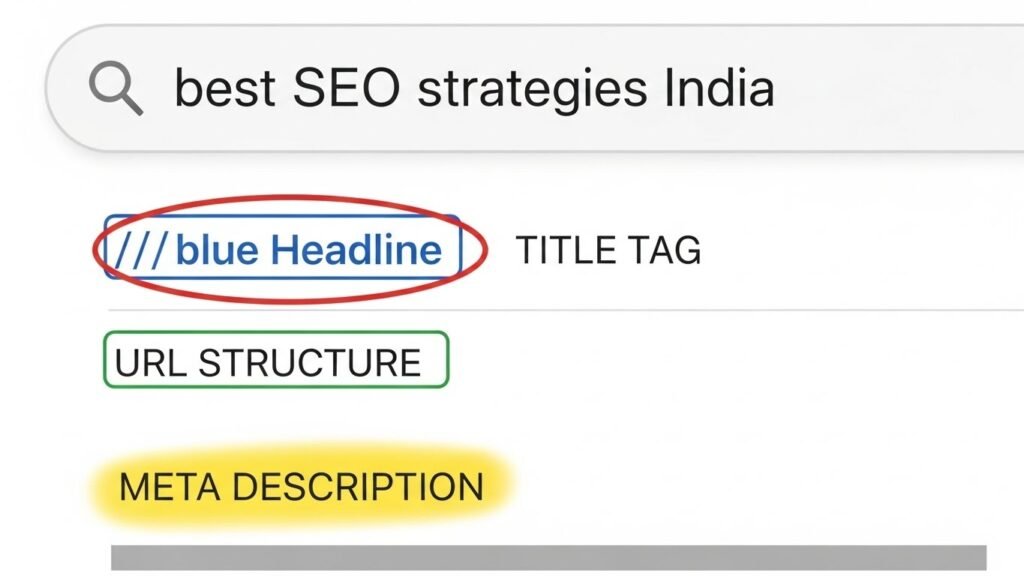
The Title tag is widely considered one of the most critical SEO elements because it acts as the headline of your webpage in search results. It is the first thing a user sees so it has a massive impact on your click-through rate and Search visibility. You must ensure your title is descriptive and includes your primary keyword near the beginning to signal relevance to Google algorithms. A well-crafted title tag balances Keyword optimization with emotional appeal to capture the user’s attention immediately.
Meta description
While the Meta description is not a direct ranking factor it plays a vital role in your Organic search performance by acting as your elevator pitch. A compelling description summarizes the page’s content and includes a clear Call to action (CTA) to entice users to click. It provides an opportunity to include LSI keywords naturally which can help highlight Content relevance in bold text within search snippets. writing a unique meta description for every page is a fundamental part of Web content importance.
Heading tags
Heading tags like the H1 tag and H2s provide a crucial structure that helps both users and search engines navigate your content. The H1 tag should always function as the main headline of the page and clearly state the topic to support Content hierarchy. Subheadings break up text into manageable chunks which improves Readability and keeps the reader moving down the page. Proper use of headings allows you to target secondary keywords and enhances the overall User journey.
URL
An optimized URL structure should be short, descriptive, and easy for both humans and search engines to understand. Avoid using long strings of random numbers or characters and instead use clear words that describe the page content. A clean URL reinforces your Keyword research efforts and makes it easier for users to recall and share your links. Consistent URL structures contribute to better Information architecture and help search bots crawl your site more efficiently.
Keywords
Modern Keyword optimization has evolved from simple repetition to a more sophisticated approach involving Semantic content and intent matching. You should focus on integrating your main terms and LSI keywords naturally to avoid the penalty of keyword stuffing. Machine learning models like RankBrain now prioritize context so your content must sound natural while still signaling its topic. Strategic placement of keywords in the first 100 words helps establish Content relevance early on.
Internal links
Internal links are the neural network of your website because they connect your content and distribute link equity to important pages. By linking to related articles you help Google understand the relationship between different topics and build your Site structure. This strategy encourages visitors to explore more of your site which increases Dwell time and reduces bounce rates. Smart internal linking is a powerful way to boost the Page authority of your newer or lower-ranking pages.
External links
Linking out to high-quality sources using External links builds trust and shows Google that your content is well-researched. It aligns with E-E-A-T principles by demonstrating that you are referencing authoritative data to support your claims. While you might fear losing traffic to other sites external links actually enhance the user experience by providing additional value. This practice places your content within the broader web ecosystem and can positively influence your own Domain authority.
Images
Multimedia elements like images make your content more engaging but they must be optimized to avoid hurting your Site speed. You should always include descriptive Image alt text to help visually impaired users and allow search engines to “see” your images. Properly compressed images contribute to better Core Web Vitals scores which are now essential Ranking signals. Visual content breaks up walls of text and significantly improves User signals like time on page.
Readability
Readability is often an overlooked aspect of On-page SEO but it is vital for keeping users engaged with your content. You should use short sentences and simple words to ensure your message is accessible to a wide audience in India. High readability scores correlate with better User engagement because visitors can quickly scan and absorb the information they need. Tools like Hemingway or Yoast can help you simplify your writing style to match SEO best practices.
Word count
While there is no perfect word count for every topic longer content generally tends to perform better because it offers comprehensive answers. Deep dive articles allow you to cover more LSI keywords and answer related questions that users might have. However you should never prioritize length over Content quality because fluff will only drive users away. The goal is to provide the most valuable information possible to satisfy the User intent completely.
Ready to dominate? Download Survival Engine Pro today and secure your rankings.
Which On Page Element Carries The Most Weight For SEO?
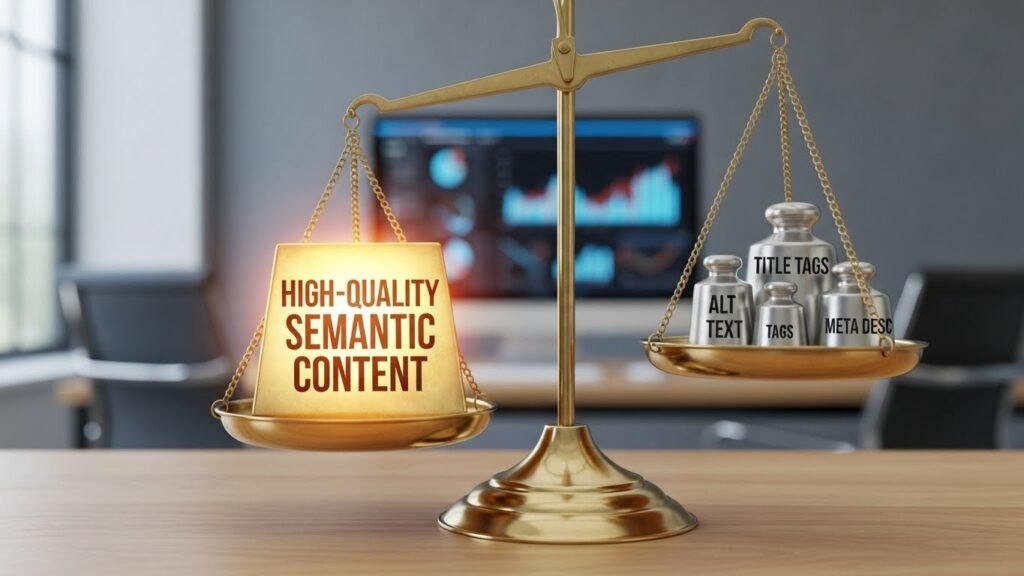
Which On Page Element Carries The Most Weight For SEO?
When we analyze Which On Page Element Carries The Most Weight For SEO the consensus among experts is that the Title tag and Content quality are the top contenders. The Title tag is your strongest signal to search engines about the page’s topic and it is the primary hook for users in the SERPs. However even the perfect title cannot save a page if the content itself is thin or irrelevant to the user’s needs. Therefore high-quality Semantic content that thoroughly addresses the query is ultimately the most weighty factor for long-term rankings.
You must remember that SEO elements do not exist in a vacuum so a holistic approach is always best. While optimizing your H1 tag and URL structure gives you a competitive edge it is the synergy of all these factors that drives Search rankings. Focusing on User experience (UX) and E-E-A-T principles ensures that your site remains resilient against future Google updates. By prioritizing Content strategy alongside technical tweaks you will build a powerful Online visibility engine that delivers results.
Explore more:
Ben Stace: Semantic SEO Expert & Topical Authority Leader
Write SEO Content With Confidence: 10X Your Traffic
How to Survive Google Core Updates: Survival Engine Pro
AI DSUR Writing Tool: 10x Faster Safety Report Automation

Haider Khan is a digital creator, blogger, YouTuber, and digital marketer with 6+ years of experience in SEO, content writing, and web design. I help brands grow online through effective strategies and creative content.