
Google’s algorithm isn’t what it used to be. Gone are the days when keyword stuffing, basic backlinks, and exact match domains could guarantee you a spot on the first page. In 2026, the SEO landscape is dominated by Semantic Relevance, E-E-A-T (Experience, Expertise, Authoritativeness, Trustworthiness), and Helpful Content Signals.
If you’ve noticed your rankings fluctuating wildly every time Google rolls out a Core Update, you’re not alone. Thousands of webmasters lose 40-60% of their traffic overnight because their content lacks the “depth” that AI-driven algorithms now demand.
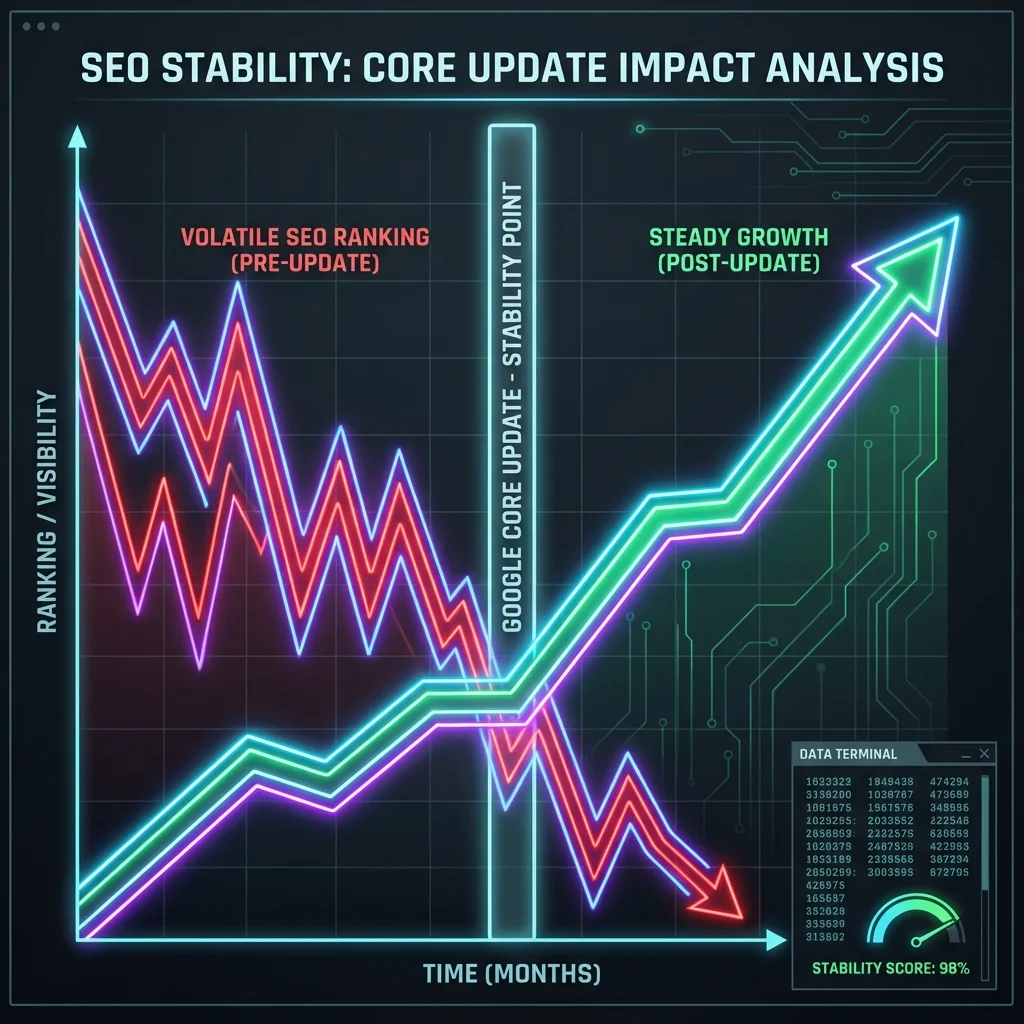
But there is a way to not just survive, but thrive during these updates. It requires shifting from “guessing” to “data-driven” decisions. Enter Survival Engine Pro (also known as SEO Pro by Haider Khan)—the ultimate tool designed to decode the algorithm and safeguard your rankings.
The Problem: Why Sites Crash During Updates
To understand the solution, we first need to understand why websites fail. When Google updates its core ranking systems (like the Helpful Content System or the Reviews System), it isn’t punishing you; it’s rewarding better answers.
Most sites crash because:
- Thin Content: They cover the “what” but miss the “how” and “why”.
- Missing Context (LSI): They fail to use Latent Semantic Indexing (LSI) keywords that Google uses to understand context.
- Low Topical Authority: They don’t cover a topic comprehensively enough to be seen as an expert.
Google’s AI (RankBrain, BERT, and Gemini) looks for vectors of meaning. If your article on “Best CRM Software” doesn’t also talk about “lead scoring,” “integration,” “pricing tiers,” and “customer support,” Google assumes your content is superficial.
The Solution: Semantic Connectivity & LSI

This is where Survival Engine Pro V3 changes the game. Instead of guessing which keywords to use, the tool performs a deep-dive analysis of the Top 10 ranking competitors for your target query.
It doesn’t just look for “keywords”; it looks for semantic relationships.
- Focus Keywords: The core terms your competitors are optimizing for.
- LSI Keywords: The supporting context terms that prove relevance (e.g., if you write about “Apple,” LSI terms like “iPhone”, “Mac”, “Fruit”, “Nutrition” tell Google WHICH Apple you mean).
- NLP Phrases: Natural Language Processing terms that specific AI models look for to determine sentiment and expertise.
By integrating these missing links into your content, you essentially “future-proof” your articles. You aren’t just writing for humans; you are speaking the algorithm’s native language.
Explore more: Which On Page Element Carries The Most Weight For SEO?
Feature Deep Dive: How Survival Engine Pro Works
Let’s break down how you can use this tool to recover lost rankings or dominate a new niche.
1. Instant Content Analysis
The moment you open the extension on a competitor’s page, it scans the DOM structure in milliseconds. It bypasses noise (ads, navigation, footers) and extracts only the pure content signals.
- Word Count Analysis: Do you need 1500 words or 3000? The tool tells you the average length of winning content.
- Heading Structure (H1-H6): See exactly how competitors outline their articles. You can “Copy Headings” with one click to build your own superior outline.
2. The “Structure” Tab
Rankings are often decided by structure. If your competitor has a “Conclusion” and a separate “FAQ” section, and you don’t, you lose points. Survival Engine Pro visualizes the skeletal structure of top-ranking pages, allowing you to identify content gaps instantly.
3. Advanced Keyword Extraction (The Secret Weapon)
This is the most powerful feature.
- Frequency Analysis: See which terms are over-optimized.
- Density Check: Ensure you aren’t keyword stuffing (a major penalty signal).
- One-Click Copy: Copy the entire list of LSI/NLP keywords as comma-separated values to paste directly into ChatGPT, Jasper, or your content brief.
4. AI Prompt Generation

Writing optimization prompts for AI is hard. Survival Engine Pro automates it. It takes the extracted data—Headings, Keywords, LSI terms—and generates a perfectly engineered AI Prompt. You can feed this prompt into Gemini, GPT-4, or Claude, and it will write an article that is mathematically similar to the top-ranking results but unique in voice.
Step-by-Step Recovery Guide
If you’ve been hit by an update, follow this recovery plan using Survival Engine Pro:
Step 1: Audit Your Losers. Identify the pages that lost the most traffic. Open them in your browser.
Step 2: X-Ray Your Competitors. Google your main keyword. Open the #1 result. Launch Survival Engine Pro.
- Go to the Keywords Tab.
- Look at the “Missing Keywords” gap. What terms are THEY using that you aren’t?
Step 3: Re-Optimize. Go back to your content. Add sections that cover these missing LSI topics. Update your Headings to reflect the depth shown in the “Structure” tab.
Step 4: Verify E-E-A-T. Ensure your “About Author” schema is correct and your content links to authoritative external sources.
Conclusion
SEO in 2026 isn’t magic; it’s data science. The Google Core Update isn’t a penalty box—it’s a filter that removes noise. By using Survival Engine Pro, you ensure your website is never seen as noise. You become the signal.
Don’t wait for the next crash. Equip yourself with the right data, optimize your content structures, and survive the search engine evolution.
Ready to dominate? Download Survival Engine Pro today and secure your rankings.
Read more:
Write SEO Content with Confidence Using Semantic SEO and 10X Your Website Traffic
Ben Stace: Semantic SEO Expert, Consultant, and Topical Authority Leader
AI DSUR Writing Tool: 10x Faster Safety Report Automation

Haider Khan is a digital creator, blogger, YouTuber, and digital marketer with 6+ years of experience in SEO, content writing, and web design. I help brands grow online through effective strategies and creative content.